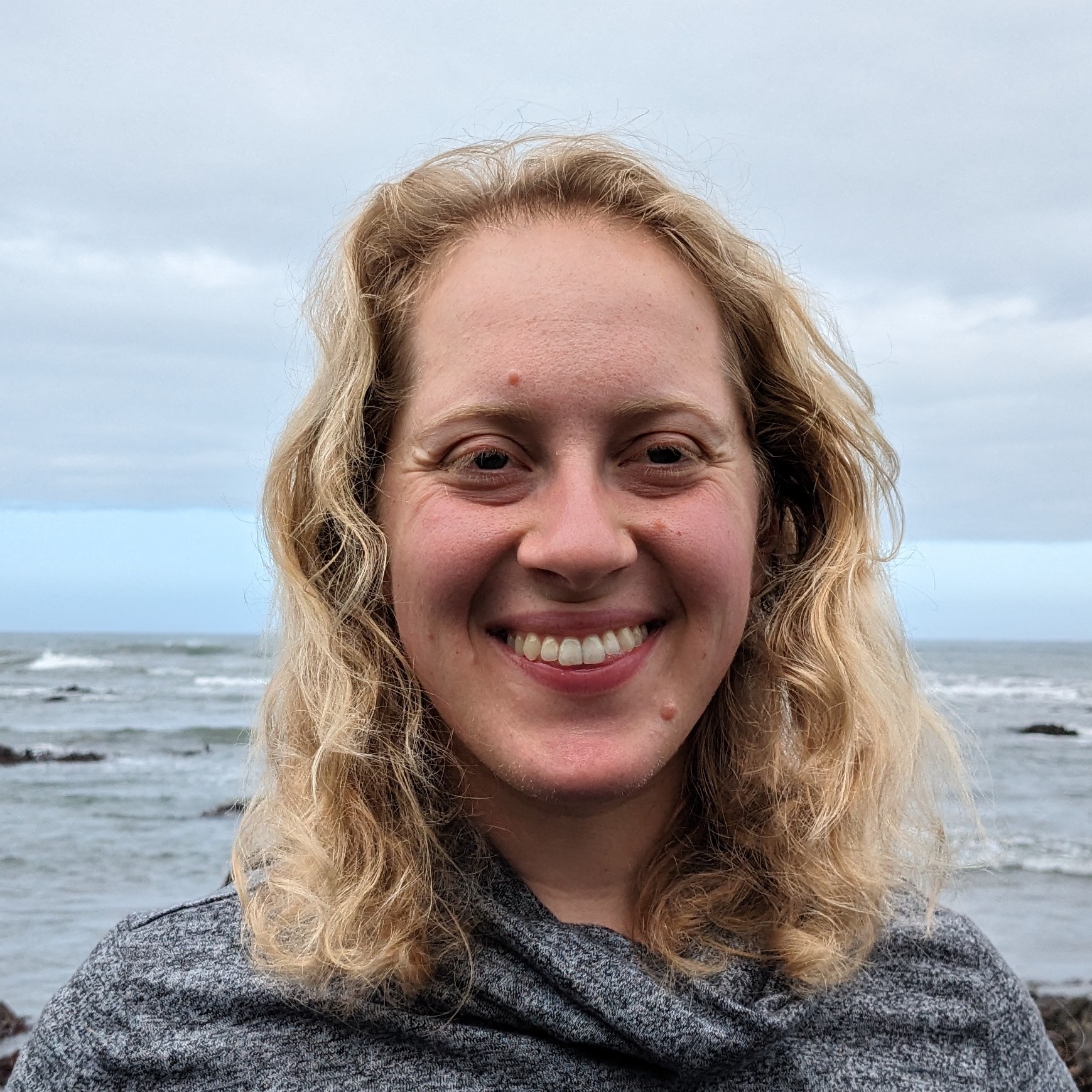
Hi! I’m a Ph.D. candidate in Education Data Science at Stanford University. My research uses a policy lens to promote equitable access to advanced STEM coursework and higher education for secondary students. I apply causal inference methods developed in economics, political science, and machine learning to problems in education. Recently, I showed that a new Advanced Placement computer science course, designed to attract students from underrepresented groups, successfully caused huge jumps in participation among Black, Hispanic, and female students. Currently, through a research-practice partnership with a local high school district, I’m investigating whether a science class detracking initiative was able to positively influence academic and behavioral outcomes. I’m also studying policy changes promoting equitable access to higher education. My work is supported by the Stanford Interdisciplinary Graduate Fellowship, Stanford Graduate Fellowship in Science & Engineering, George P. Shultz Dissertation Support Fund at SIEPR, and Emerging Education Policy Scholars program.
Prior to Stanford, I taught math and AI at an international school in Italy and then led the curriculum and instruction team at a startup offering AI courses to secondary students. I continue to work on curriculum development and teacher preparation in AI. I received a B.S. in Computer Science and Math, M.Eng. in Computer Science, and teaching license in secondary math from MIT.
Publications
D. Ganelin & T. Dee (2025). New Advanced Placement Course Designed to Broaden Access Promotes Participation and Demographic Diversity in Computer Science Education. Proceedings of the National Academy of Sciences.
D. Ganelin & I. Chuang (2019). IP geolocation underestimates regressive economic patterns in MOOC usage. Proceedings of the 11th International Conference on Education Technology and Computers.
D. Chamberlain, R. Kodgule, D. Ganelin, V. Miglani, & R.R. Fletcher (2016). Application of semi-supervised deep learning to lung sound analysis. Proceedings of the 38th International Conference of the IEEE Engineering in Medicine and Biology Society.
Teaching
- Mini Courses in Methodology: Stata, Stanford University, 2022-26 (Instructor)
- Curiosity in Artificial Intelligence, Stanford University, 2024 (Teaching Assistant)
- AI in Healthcare, Designing Deep Learning Systems, and AI Pioneers for Middle-School Students, Inspirit AI, 2020-21 (Curriculum Developer)
- AI and Society, Marymount International School Rome, 2019-20 (Teacher & Curriculum Developer)
- Precalculus and AP Statistics, Cambridge Rindge and Latin School, 2017-18 (Student Teacher)
- Mathematics for Computer Science, MIT, 2016 (Teaching Assistant)